

Market Review July 2026
Market Outlook Ex-Japan
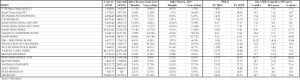
Risk assets from most major markets recovered strongly despite considerable geopolitical turbulence in the Middle East region. Latest quarter corporate earnings announcement drove investors risk appetite. Both technology and financial sector earnings were strong. The World Index gained 4.37% in May. The MSCI Far East Ex. Japan index outperformed, gaining 12.88%, driven by North Asia markets, in particular Korea and Taiwan markets which are highly leverage to the positive demand and supply dynamic of the semiconductor industry where AI capex provide strong earnings visibility. Within the Asia region, ASEAN equities lagged with a small gain of 0.23%, led by Thailand (+5.00%) and Singapore (+2.55%) markets. Regional currencies mostly weakened against the USD. The best performing currencies were Taiwan Dollar (+0.96%) and Chinese Yuan (+0.92%), while the weaker ones were Indonesia Rupiah (-2.99%) and Korean Won (-1.80%).
US indices gained across the board on good earnings announcements amid uncertainty in geopolitical development. For the month, Dow Jones Industrial Average (DJIA), S&P 500 Index and Nasdaq Composite gained 2.78%, 5.15% and 8.36% respectively. The earnings reporting season was notably strong, with 84% of reporting companies beating consensus earnings expectations, well above the historical average of 73%, and earnings coming in 28.6% above those expectations, compared to a long-run average of 6.3%, though this has been skewed by the technology sector.
The Stoxx Europe 600 Index gained 2.41% from the prior month. The Eurozone economy lost momentum in 2Q26 as higher energy prices, geopolitical tensions, and weaker external demand weighed on economic activity. The escalation of conflict in the Middle East led to a sharp increase in oil and gas prices, raising input costs for businesses, particularly in manufacturing and transport-related sectors, while also weakening consumer confidence. Although manufacturing output received a temporary boost from precautionary inventory accumulation and front-loaded orders amid concerns over potential supply disruptions, underlying business sentiment deteriorated, and companies became more cautious regarding investment and hiring plans. Domestic consumption remained the primary driver of growth, supported by resilient household spending and government investment programs. However, tighter financial conditions and sluggish export performance continued to limit broader economic expansion.
Hang Seng Index and Hang Seng China Enterprises Index declined 2.30% and 2.95% respectively. China’s economy entered 2026 on a relatively strong footing, with real GDP growth accelerating to 5.0% YoY in 1Q26 from 4.5% in 4Q25. Nominal GDP growth also improved to 4.9%, marking its fastest pace in nearly three years as deflationary pressures gradually eased. However, more recent data suggest that economic momentum weakened in 2Q26. Official Purchasing Managers’ Index (PMI) readings in May indicated that manufacturing activity remained close to the expansion threshold but continued to lose momentum amid softer external demand and rising input costs linked to geopolitical tensions in the Middle East. While the services sector showed signs of recovery, the improvement has been insufficient to offset weak consumer spending and ongoing challenges in the property market. This slowdown was also reflected in April’s macroeconomic indicators, with urban fixed asset investment returning to contraction due to slower fiscal spending (the sharpest decline in six months) while credit growth remained subdued amid continued deleveraging efforts.
South Korea’s KOSPI Index staged a remarkable rally, surging 28.45% over the past month. South Korea’s trade performance strengthened significantly in May, driven by robust demand for technology-related exports. Semiconductor exports surged 169.4% YoY to a record monthly high of US$37.16 billion, supported by rising memory chip prices and increased investment by U.S. technology firms. Computer exports also recorded exceptional growth of 290.7% amid strong demand for AI servers, while petroleum product exports increased 46.6% due to elevated oil prices. In contrast, automobile exports declined 5.9%, weighed down by supply chain disruptions in the Middle East and the impact of U.S. tariffs. By destination, exports to the United States and China rose 59.1% and 80.9%, respectively, while shipments to the Middle East fell 7.7%. Imports increased 20.8% to US$60.80 billion, marking the strongest growth since August 2022, though it was slightly below economists’ expectations. As a result, South Korea recorded a trade surplus of US$26.95 billion, up from US$23.75 billion in the previous month and the highest level on record.
Taiwan’s TWSE Index was up strongly, gaining 14.92% following positive sentiment on global technology sector. Taiwan’s economy accelerated sharply in 1Q26, with real GDP expanding 14.55% YoY, marking its fastest pace of growth in 44 years. On a seasonally adjusted basis, the economy grew 1.69% QoQ, extending its expansion streak to 12 consecutive quarters. Growth continued to be driven primarily by strong external demand linked to artificial intelligence (AI) and related infrastructure investments, which have also generated positive spillover effects across domestic consumption and capital expenditure. Private consumption strengthened, supported by increased spending on communication services, entertainment, transportation, and outbound tourism, while strong equity market performance helped boost consumer and business sentiment. Gross fixed capital formation remained robust, underpinned by sustained investments in machinery, equipment, and intellectual property. Net exports contributed 10.33 percentage points to overall GDP growth and remained the key growth driver, while contributions from private consumption (+2.16 percentage points), fixed investment (+1.69 percentage points), and government spending (+0.48 percentage points) also improved significantly. Meanwhile, the drag from inventory adjustments narrowed to -0.11 percentage points and is expected to turn positive from 2Q26 onwards following a prolonged inventory drawdown throughout 2025.
Singapore’s STI gained 2.55% in May. Singapore’s economic growth in 1Q26 was revised significantly higher, with GDP expanding 6.0% YoY and 1.0% QoQ, compared with the advance estimates of 4.6% YoY and a -0.3% QoQ. The upward revision reflected stronger-than-expected performance across all major sectors of the economy. Manufacturing growth was revised up to 7.9% YoY from 5.0%, while construction expanded 11.8% YoY compared with the earlier estimate of 9.0%. The services sector also performed better than initially expected, growing 5.7% YoY versus 4.7% in the advance estimate. Within services, wholesale trade remained a key growth driver, expanding 2.3% QoQ on a seasonally adjusted basis. The sector benefited from robust demand for telecommunications equipment, computers, and electronic components, reflecting continued strength in AI-related investments and technology supply chains.
Malaysia’s KLCI declined 2.26%. Real GDP growth moderated to 5.4% YoY in 1Q26, down from 6.2% in 4Q25, although overall economic activity remained supported by strong festive spending during the Lunar New Year and Hari Raya periods, as well as government cash transfers, subsidies, and civil service wage increases. Monthly GDP data, however, pointed to a gradual loss of momentum throughout the quarter, with growth easing from 6.8% in January to 5.2% in February and 4.1% in March. The slowdown coincided with the escalation of geopolitical tensions in the Middle East from late February, which weighed on business sentiment and economic activity.
Thailand’s SET Index gained 5.00% in May. Thailand’s economy delivered a stronger than expected performance in 1Q26, with real GDP expanding 2.8% YoY and 0.7% QoQ on a seasonally adjusted basis. Growth was supported by increased investment, stronger goods exports, higher government spending, and resilient private consumption. However, the improvement does not yet signal a fundamental shift in the economy’s growth trajectory. Beneath the headline figures, economic momentum remained uneven, as imports grew faster than exports, domestic value-added spillovers were limited, and the trade balance recorded its first deficit in 14 quarters. Exports are expected to remain the primary driver of growth in 2026, supported by strong demand for electronics, technology-related products, and automobiles, as well as front-loaded orders stemming from supply chain adjustments and rising production costs. Export growth remained robust in April, rising 23.1% YoY to US$ 31.6 billion and marking the 22nd consecutive month of expansion, while cumulative exports for January to April increased 18.9%. However, the same data also highlighted structural challenges, with imports surging 45.0% YoY in April, resulting in a US$10.0 billion trade deficit. This suggests that while export strength continues to support headline GDP growth, its benefits are not fully translating into a broad-based recovery in domestic income and economic activity.
Jakarta Composite Index continued to weaken declining 11.92% on concerns over potential downgrade by MSCI agency to frontier market status, worries about fiscal and external balances because of rising oil prices, and fear of greater State intervention in the commodities sector. Bank Indonesia (BI) raised its benchmark rate by 50bps to 5.25% at its May 2026 policy meeting. The policy move appears primarily aimed at supporting rupiah stability amid persistent pressure from capital outflows and external market volatility. Indonesia’s annual inflation accelerated in May, rising to 3.08% YTD from 2.42% in April. Key items driving price increases included fresh fish, rice, red chili, shallots, cooking oil, machine-rolled cigarettes, and gold jewellery. Meanwhile, core inflation remained stable at 2.59% YoY, or 0.22% MoM, indicating that underlying price pressures remained relatively contained despite elevated geopolitical uncertainties. Looking ahead, inflation is expected to average around 2.5% in 2026, although risks are tilted to the upside due to potential disruptions arising from ongoing geopolitical tensions in the Middle East and their impact on global commodity and energy prices.
The Philippines PSE Index declined 1.11%. The slowdown in economic growth reflected a combination of domestic and external challenges, including higher energy costs stemming from the conflict in the Middle East, as well as governance-related issues that weighed on public investment and consumer spending. Growth weakened across all major sectors of the economy, with agriculture contracting 0.2% YoY and construction declining 2.8%, while mining and quarrying, manufacturing, utilities, and services expanded at a slower pace of 3.8%, 0.5%, 0.7%, and 4.5%, respectively. Government expenditure emerged as the key driver of growth, accelerating to 4.8% YoY from 0.7% in 4Q25, helping to offset softer household consumption growth of 3.0% and a 2.7% contraction in investment. Economic activity was also weighed down by negative contributions from net exports (-0.2 percentage point).
Vietnam’s VN-Index gained 0.51%. Manufacturing activity showed signs of improvement in May, with the Purchasing Managers’ Index (PMI) rising to 52.8 from 50.5 in April and 49.8 a year earlier, indicating a stronger expansion in factory activity. The output index also increased sharply to 55.6, reflecting robust production conditions. However, inflationary pressures continued to build, with headline inflation edging up to 5.6% in May from 5.5% in April and 4.7% in March, reaching its highest level in six years. Despite the stronger PMI readings, manufacturing output growth moderated to 9.0% YoY in May from 10.0% in April, bringing average growth in 2Q26 to 9.5%, compared with 11.0% in 1Q26. External trade momentum also softened, with export growth easing to 18.0% YoY from 21.0% in April, while import growth accelerated to 33.8% from 32.5%. As a result, the cumulative trade balance for January to May recorded a deficit of US$12.7 billion, compared with a US$5.0 billion surplus in the same period of 2025, marking the widest trade gap in nearly three decades.
MARKET OUTLOOK
The shift to a dovish monetary stance in the US at the start of 2026 appears now to have been upended by the war in the Middle East. After an almost 12 months of twist and turns in the US tariff saga, the market is still divided on impact of higher tariffs on macro variables such as inflation and economic activities. Meanwhile, US corporate earnings, especially in the technology sector, continue to be key pillar to hold up risk assets. US market valuations are at historical high, and the high valuation is further driven by strong capital expenditure drive for AI, which has raised questions as to whether the humongous expenditures in AI will generate the anticipated returns. The semiconductor and AI investment cycle may move into a more difficult phase as investors will start to be more discerning with regard to their return on investment. If and when the supply and demand dynamic in the semiconductor cycle should turn, on the margin, with supply capacity expanding at a time when global demand soften on lower GDP growth outlook, headwinds for the industry can be expected.
Geo-political developments as well as policy directions in the major economies, in particular US and in China, remain on our radar screen. The market is still watchful of developments in Trump’s tariffs for the key trade partners. The US tariffs scene has been marked by changes, and uncertainties remain. Meanwhile, new geo-political fissures have opened up with the recent US military raid and capture of Venezuela President, Nicolas Maduro Moros, and the repeated utterings by President Trump of his intention to bring Greenland within the US fold, militarily if necessary. Adding to these is the flare up of the military conflict between the US/Israel and Iran that has engulfed the entire Middle East and choked the supply of crude oil and LNG from the region to the world. These developments further heightened tension in global geo-politics. In the near term, the US mid- term election to be held in the later part of 2026 may change the balance of power in the US Congress and have significant impact on US policies in the remaining years of Trump’s term. These developments will create uncertainties for investors. The duration of the Middle East war has added to uncertainty in global growth outlook as supply chain disruptions in energy sources among other things push inflation higher and change macro variables assumption.
In Asia, the focus is on the pace of China’s economic recovery which has been weaker than expected. The tariff issues with the US and continuing efforts to broaden restrictions on sales of tech equipment and services to Chinese entities can only exacerbate the economic situation in China. The Chinese property sector continues to face challenges, and any sign of stabilization and growth will have positive catalyst for China’s economy and risk assets. The Chinese government continues to bring forth measures to help the economy. The Chinese government remains constructive on policies to spur economic activities to achieve economic growth target. The various measures have boosted market sentiments. However, the longer- term effectiveness on China’s economy continues to be closely watched. It may take time for the initiatives to bear fruits. The focus will be on addressing the challenges in the property market, lifting consumer sentiments and consumption, and countering the effects of the new US tariffs.
On external trade, countries with high export dependency for growth in the Asia region including ASEAN will face significant challenges arising from the US tariff policies. The disruption in supply chain realignment may result in temporary mismatch in corporate earnings delivery against market expectation during the initial stage of tariff implementation. To-date, while ASEAN countries’ exports to the US have been impacted by the tariffs, these countries have been able to mitigate the impact on the economic growth through trade diversifications. Many of these countries have now to also contend with having to manage disruptions in energy supplies and the ensuing price escalations.
While interest rates have started to be eased, there remains headwind for risk assets, including the impact of the still high interest rate on business and economic activities, uncertainties in US policies, the historically high market valuations in the US, the geo-political tension in various parts of the world and resulting disruptions to energy supplies, as well as the still slower than expected economic growth in China. However, in the investment space we are in, we believe there is room for cautious optimism. After years of prolonged sell down, and despite the upticks in recent months, China equities remain under-owned and their favourable valuation offer potential upside, particularly following the recent rounds of significant policy change initiatives from China.
INVESTMENT STRATEGY
We continue to apply our strategy of focusing on identifying fundamentally healthy companies with low valuations, low leverage, high growth, robust management and a strong track record, and adherence to our investment philosophy of “Never Fully Invest at All Times” which has served us well over the years.
We thank you once again for your continued faith in us and hope to remain good stewards in our endeavour to protect and grow your capital.
MALAYSIA
Market Summary
The FBMKLCI Index decreased 1.13% month-on-month to close the month of June 2026 at 1664.06 points. YTD the index has decreased 0.96%. The RM appreciated 3.03% month-on-month against the USD and closed at MYR 4.08 for the month of June. YTD the RM has depreciated 8.65% against the USD.
Economic News
Headline inflation increased slightly to 2.0% YoY in May 2026 (Apr 2026: 1.9% YoY), while core inflation remained stable at 2.0% YoY, indicating that underlying price pressures remain contained. Inflation risks remain tilted to the upside due to elevated global energy and commodity prices arising from supply disruptions linked to the Middle East conflict, particularly through fuel, energy, and transportation costs. Accordingly, inflation forecasts are maintained at 2.0% for 2026 and 2.5% for 2027.
Malaysia’s export performance remained exceptionally strong, with May 2026 exports surging 45.3% YoY, marking the fastest growth since August 2022. The increase was driven primarily by a 70.5% rise in electrical and electronic (E&E) exports and a 97.7% jump in exports to the United States, resulting in a record trade surplus of RM40.4bn.
Amid a weaker Ringgit, which depreciated 4.3% during June up to 24 June 2026 due to hawkish US Federal Reserve expectations and domestic political uncertainties, Bank Negara Malaysia’s Financial Markets Committee announced additional measures on 24 June to strengthen foreign exchange inflows. These measures include intensified engagement with government-linked companies and corporates to repatriate and convert overseas earnings, alongside enhancements to the Qualified Resident Investor Programme. Following the announcement, the Ringgit strengthened to as much as RM4.0555/USD on 29 June 2026, outperforming regional peers. The currency was further supported by Malaysia’s strong external position, with international reserves rising to USD130.6bn in May 2026, the highest level since August 2014.
Corporate News
YTL Power International Berhad is a diversified infrastructure and utilities group with core businesses spanning electricity generation, water and wastewater services, telecommunications, renewable energy and data centres, with key assets including Wessex Water (UK), PowerSeraya (Singapore), PT Jawa Power (Indonesia), YTL Communications and Ranhill Utilities. The group is undergoing a strategic transformation from a traditional utility company into a regional digital infrastructure and AI-driven data centre player, supported by strong recurring cash flows from its utility assets. Financially, YTL Power remains robust, with FY26E revenue forecast at RM21.9bn, rising to RM22.6bn in FY27F and RM22.9bn in FY28F, while core PATAMI is expected to increase from RM2.14bn in FY26E to RM2.48bn in FY27F and RM2.67bn in FY28F, translating into EPS of 21.7 sen, 25.1 sen and 27.1 sen respectively. Profitability is projected to improve, with EBIT margins expanding from 17.5% in FY26E to 19.5% in FY27F and 20.8% in FY28F, while ROE is forecast at approximately 10%, supported by strong operating cash flow generation of RM4.7bn in FY26E and a sizeable cash balance of RM10.9bn. Rapidly expanding data centre business at the YTL Green Data Centre Park in Kulai, Johor, where total delivered capacity has increased to 150MW, secured capacity stands at 298MW, and management expects 288MW to be delivered by FY27 and this is their one of the strongest catalyst. The group currently has four operational data centres, one under testing and two under construction, and has doubled its Johor development target from 600MW to 1.2GW, while pursuing a larger 2.4GW regional data centre pipeline encompassing Cyberjaya, Klang Valley and potential overseas expansions into Thailand, Indonesia, Japan, and the UK. Data centre earnings are ramping up quickly, with quarterly revenue growing from RM56.2m in 1QFY26 to RM224.6m in 3QFY26, reflecting strong demand from global hyperscale and AI customers. In addition, YTL Power plans to commission 215MW of off-grid solar capacity by end-2026, forming part of a longer-term 600MW solar development plan to provide green energy solutions for its data centres. The stock has a buy call with TP of RM5.65. The stock also offers 38.5% capital upside, 2.0% dividend yield, yield and 40.5% total expected return, while trading at only 16.3x FY27F PER.
Petronas Chemicals Group Berhad (PCHEM) is Malaysia’s leading integrated chemicals producer, manufacturing a diversified range of petrochemical and specialty chemical products including olefins, polymers, fertilizers, methanol, and specialty chemicals, with operations spanning the Olefins & Derivatives (O&D), Fertilisers & Methanol (F&M) and Specialty Chemicals segments. After reporting a challenging FY25 due mainly to losses from its 50%-owned Pengerang Petrochemical Company (PPC), PCHEM is expected to stage a significant earnings recovery in FY26, with revenue forecast to increase from RM27.5bn in FY25 to RM29.7bn in FY26F, while core PATAMI is projected to rebound from a RM534m loss in FY25 to RM1.94bn in FY26F, before moderating to RM648m in FY27F. The group’s balance sheet remains very strong with RM11.0bn cash, RM37.2bn shareholders’ equity, a net cash position and low gearing of 8.4%, providing ample financial flexibility for growth projects. In terms of catalyst for the company, potential divestment of its 50% stake in PPC, which is currently estimated to be incurring annual losses of approximately RM500m–600m attributable to PCHEM and could significantly improve profitability while unlocking value through a possible special dividend. Management is also targeting to increase the contribution from its higher-margin Specialty Chemicals segment to more than 30% of group revenue by 2030 from around 20% currently, supported by 5-6 organic growth projects over the next three years with capex of approximately RM250m-500m per project. Operationally, demand remains supported by a major customer renewing its term contract, reflecting stronger supply-security requirements, while polyethylene spreads remain healthy at USD600-800/MT despite softer feedstock prices. Although urea prices have corrected sharply following easing geopolitical tensions and increased China exports, management expects a recovery towards USD500/MT in 2HFY26 as seasonal agricultural demand returns. PCHEM holds BUY with a target price of RM5.56, based on 1.2x P/B, versus the current share price of RM4.02, implying 38.3% upside, 2.5% dividend yield and 40.8% total expected return.
Dagang NeXchange Berhad (DNeX) is a diversified technology and energy group with three core businesses comprising Semiconductor (61%), Energy (23%), and Information Technology (16%), with its key assets being 60%-owned SilTerra, a specialty semiconductor foundry, 90%-owned Ping Petroleum, and its mission-critical government digital infrastructure platforms such as the National Single Window (NSW) and iGFMAS. The investment case is increasingly centered on two major growth engines: SilTerra’s exposure to the rapidly growing AI-driven silicon photonics market and Ping Petroleum’s Malaysia upstream oil and gas expansion. Financially, FY25 was a transition year, with revenue declining to RM1.04bn from RM1.17bn in FY24 and the group recording a core net loss of RM14.4m, impacted by semiconductor weakness, UK energy-related headwinds and impairment charges, although losses narrowed from RM28.0m in FY24. Encouragingly, 1QFY26 showed early signs of recovery, with revenue of RM267.6m, PBT of RM23.3m and core net profit of RM19.3m, compared with a core net loss of RM65.8m in 4QFY25. DNeX maintains a strong balance sheet with RM574.7m cash, RM146.3m borrowings, and a healthy net cash position of RM428.4m, further supported by its newly established RM3bn Sukuk Wakalah programme to fund future expansion. The key catalyst is SilTerra, where higher-margin emerging technology products now contribute more than 50% of revenue, led by silicon photonics wafers that command US$3,500–4,000 per wafer, compared with only US$400–500 for legacy products. SilTerra plans to double annual silicon photonics capacity from 12,000 wafers in 2025 to 24,000 wafers by end-2026, with potential expansion to 36,000–48,000 wafers annually, thereafter, positioning the group to benefit from surging AI, data centre and high-speed networking demand. In the Energy segment, Ping Petroleum’s most important catalyst is the Abu Cluster first oil targeted for 4Q26, with initial production expected at 3,000 barrels per day, more than double the group’s current production run rate of around 1,600 bpd, while the Beta, Meranti and A Clusters provide additional multi-year growth opportunities. Meanwhile, the IT division remains a stable earnings anchor, generating RM58.2m PBT in FY25 with a 35.9% margin, supported by recurring government contracts and expansion into sovereign cloud, AI and digital infrastructure solutions. On valuation, DNeX trades at approximately RM0.42 per share, equivalent to only 0.9x CY27F P/BV and 12.5x CY27F P/E, representing a substantial discount to Malaysian semiconductor peers despite its unique exposure to specialty foundry, AI-related silicon photonics and upstream oil and gas growth.
Outlook
The FBM KLCI is currently trading at 14.5x forward PE, below its 10-year average of 16.8x. The FBM KLCI index fell in Jun 2026, marking its lowest monthly close YTD, weighed down by persistent foreign selling, regional technology weakness, geopolitical uncertainty surrounding the US-Iran conflict, and pre-election risk aversion ahead of the Johor and Negeri Sembilan state elections. Sentiment briefly improved following the signing of the US-Iran peace agreement on 18 Jun, although concerns over the durability of the deal resurfaced later in the month. Domestically, sentiment was supported by the launch of the MY Value Up Guidebook and Malaysia’s rise to 15th place in the 2026 IMD World Competitiveness Ranking, while economic data stayed resilient, with stronger industrial production, exports, and wholesale and retail trade growth, alongside inflation remaining contained at 2.0%. Market liquidity softened during the month, with average daily trading value (ADTV) easing to RM3.0bn from RM3.8bn in May following the completion of the MSCI index rebalancing. We believe that the market will continue to improve in July. We continue to favour companies with robust fundamentals, low valuations, good management, and low leverage.
INDONESIA
Market Summary
The Jakarta composite Index was down 7.90% month-on-month to close the month of June 2026 at 5,643.19 points. YTD, the index was down 34.74%. The loss in Index for the month of June was driven by Bank Rakyat Indonesia Persero (-11.07%), Telkom Indonesia Persero (-17.75%) and Bank Central Asia (-6.82%). The Indonesian Rupiah depreciated 0.14% in June against the USD, and closed at IDR17,907 for the month.
Economic News
Bank of Indonesia raised the policy rate 25bps to 5.75% on 18th June, the third consecutive hike, following 20th May 50bps and the 9 June off-cycle 25bps. Bank of Indonesia framed the move as continuation of pro-stability to defend rupiah and anchor inflation within the targeted range of 2.5% plus minus 1%. Furthermore, the central bank cut the FX cash purchase limit without underlying to USD10k/month (from USD25k/month) to tightened capital flow.
Indonesia’s retail sales fell 3.7% YoY in April 2026, reversing a 3.4% increase in the prior month and marking the first decline since April 2025. The pullback underscored weaker household spending conditions, with higher non-subsidized fuel prices weighing on consumers’ purchasing power. Sales shrank more sharply for clothing (-7.0% vs -2.4% in March), and purchases of information and communication equipment stayed deeply negative (-26.4% vs -26.4%). Looking ahead, retail activity is likely to remain subdued as households continue to face pressure from elevated living costs.
Indonesia’s S&P Global Manufacturing PMI rose to 50.0 in May 2026 from April’s 49.1. Export orders however fell for a 3rd month due to Middle East conflict weighing on trade. Output shrank as material shortages forced firms to cut purchases. Input cost inflation prompting strongest selling price increase since October 2013.
Indonesia’s trade surplus narrowed to USD0.09 bil in April, marking the smallest trade surplus since April 2020. Import jumped 22.49% YoY, accelerating from 1.51% in March due to oil and gas imports soaring 85.5%, while non-oil and gas import rose 14.1%. Exports surged 21.98%, from 3.1% decline in March with non-oil and gas exports surged 23.36% on animal and vegetable fats and oils and also mineral fuels.
Corporate News
Bank Syariah Indonesia BRIS earnings grew 17% YoY in 5-month 2026, in line with expectation, due to robust net interest income and non-interest income and lower provision expenses. Loan grew 15% YoY and deposit grew 17% YoY, resulting in loan to deposit ratio LDR rose to 89.7% in May 2026, below 91.4% in May 2025. Net interest margin NIM expanded 10bps YoY to 5.3% due to improvement in cost of funds. Monthly basis, NIM also expanded by 11bps to 5.1% on higher asset yield. Provision expenses reduce 22% in 5M26 with credit cost down 32bps YoY to 0.7%. Cost to income ratio rose to 52.5% from 49.4% on higher spending on building up transaction banking franchise.
Bank Tabungan Negara BBTN earnings grew 24% YoY in 5-month 2026 to Rp1.5tril due to normalized back its credit cost, forming 38% of FY26 estimate – in line. Bank profit before provision PPOP declined 9% YoY to Rp3.0 tril in 5-month 2026 dragged down by lower net interest income and lower non-interest income. Bank loan contracted 6% YoY and deposit also contracted 6%, with CASA ratio down to 48.6% in May 2026 from 49.1% in May 2025. Loan deposit ratio was 92.5% in May26 from 92.1% in May 2025. Net interest margin NIM improved slightly to 3.6% from 3.5% in 5M25. Credit cost normalized to 0.8% from 1.2% in 5M25.
PT Telekomunikasi Indonesia TLKM posted 1Q26 revenue of Rp37.2 tril (+1.5% YoY) but profit after tax and minority interest PATAMI fell 21.7% YoY to Rp4.34tril, forming 18.8% consensus estimate, mainly due to Rp309bil unrealized losses on Goto investments and accelerated depreciation of Rp498bil. Data and internet (65.7% revenue) grew 9.5% YoY, Its fiber broadband IndiHome(17.2% revenue) drop 4.3% YoY. Operating profit declined 5.9% YoY to Rp9.27tril with operating margin contracting to 24.9% from 26.9% in 1Q25 due to higher operating expenses (+15.5% YoY).
PT Trimegah Bangun NCKL reported strong 1Q26 net profit of Rp2.7tril (+64% YoY/+8% QoQ), due to strong earnings contribution from high margin HPAL operations and higher earnings from its associate PT Karunia Permai Sentosa (KPS). Mandiri expect stronger earnings in the coming quarters, driven by higher contribution from KPS as new capacity ramp up and higher ASPs, despite the risk of rising costs from nickel ore, energy and sulfur prices.
Outlook
The war between US-Israel and Iran which started on 28th February 2026. Since then, a temporary cease fire was announced in 8 April and both side has started peace negotiation since mid-June 2026 and oil tanker starting to transit through Strait of Hormuz. The Brent crude oil price has drop to USD70 per barrel from more than USD120 per barrel during the peak. However, the peace deal negotiation is still fragile. As Indonesia is a net importer of oil, the persistent high oil price has caused concern on government fiscal position. Indonesia government took initiatives to raise revenue through a proposed mining royalty hike, and to plug mining export revenue leakages through a state-owned export enterprise. However, investor responded with scepticism due to excessive government intervention. Concern over further sovereign rating downgrade further accelerates the foreign outflow. We view this crisis as a great opportunity to invest in some of the best Indonesia’s company at attractive price. The LQ45 index is trading at a P/E ratio of 10.6x, below its 5 year mean of 14.9x.
SINGAPORE
Market Summary
The FSSTI Index increased 2.64% month-on-month to close the month of June 2026 at 5,170.65 points. YTD the index has increased 11.29%. The SGD depreciated 1.35% month-on-month against the USD and closed at SGD 1.29 for the month of June. YTD the SGD has depreciated 0.65% against the USD.
Economic News
Singapore’s Manufacturing PMI rose to a 17-month high of 51.0 in May 2026, marking 10 consecutive months of expansion fuelled by stronger new orders, export demand, and factory output. The crucial electronics sector expanded for a 12th straight month, hitting a PMI of 51.9, while positive future business expectations signalling near-term optimism outweighed ongoing pressure from rising input costs and lengthened supplier delivery times.
Singapore’s seasonally adjusted unemployment rate held steady at a revised 2.0% in Q1 2026, marking five consecutive quarters of stability despite the citizen rate edging up to 3.1%. Total employment expanded for the 18th consecutive quarter by adding 9,400 jobs—led by administrative and transport roles for residents, and construction and manufacturing for non-residents. While retrenchments rose marginally to a low 3,830, the overall market remains resilient, though global economic uncertainties are expected to moderate future hiring and wage growth.
Singapore’s retail sales grew 5.4% year-on-year in April 2026, marking a third consecutive month of growth accelerated by surges in petrol stations (14.4%), recreational goods (12.3%), and motor vehicles (10.7%). This broad expansion extended to clothing (7.8%) and supermarkets (5.8%), countering a sharp slowdown in computer/telecom equipment (2.8%) and a minor monthly slowdown (+0.3% month-on-month) compared to March’s massive surge.
Corporate News
APAC Realty operates as one of the largest real estate agencies in Singapore, primarily driving its earnings through its subsidiary ERA Singapore, which controls a 34% market share of local home transactions and specializes in high-margin primary residential project launches. RHB has upgraded APAC Realty to BUY as risk-reward turns highly favourable following a 27% price correction from its peak, leaving the stock trading at a modest 12x FY26F P/E with an attractive 7% dividend yield. The structural catalyst stems from Singapore’s 2H26 Government Land Sales (GLS) programme, which boosted confirmed private residential supply by 4% HoH to a level more than 50% above the 10-year average. This pipeline will fuel a higher volume of highly profitable new project launches in 2027, throwing strong momentum into APAC’s core subsidiary, ERA Singapore, which captures a massive 34% of local home transactions and commands profit margins double that of the resale segment. With a strong net cash balance sheet, limited capex obligations, and the rollout of proprietary AI agent tools via the ERA Sales+ app to defend market share, the company is well-positioned for structural earnings upgrades and potential special dividends.
RHB has initiated coverage on Tai Sin Electric with a BUY rating, framing the overlooked industrial player as a high-conviction proxy for South-East Asia’s roaring data centre (DC) supercycle and Singapore’s multi-billion domestic construction boom. TSE holds an elite market position, historically supplying specialized power and distribution cables to over 70% of Singapore’s data centres, placing it directly in the path of a regional hyper-scale market projected to more than double to USD 30.5 billion by 2030 (14.2% CAGR). While an SGD 11.8 million onerous contract provision tied to a sudden 29% spike in copper prices compressed reported 1HFY26 margins, this drag is a transitory timing lag; provisions are expected to peak in FY26 before reversing across FY27–28 as older fixed-price backlogs flush out and give way to higher-margin spot contracts. Trading at an undemanding 8.7x FY27F P/E (a deep discount to its regional peer’s 13x) while offering a steady 4% dividend yield, TSE’s core underlying earnings are primed to expand at a powerful 3-year CAGR of 16.1%.
DFI Retail Group (DFI SP) is a leading pan-Asian retailer managing a vast network of hypermarkets, convenience stores, and health and beauty outlets, including brands like Meadows, Guardian, and Cold Storage. DFI delivered a solid core operational performance for 1HFY26, putting it on a steady path toward its long-term financial target of USD 310m–350m in core earnings by 2028. Total group revenue was slightly weighed down by localized supermarket competition, but profitability was heavily cushioned by a major “Own Brand” strategy revamp, which significantly closed the profit productivity gap against traditional national brand competitors. Most importantly, DFI is unleashing an aggressive regional partnership pipeline to capture the premium consumer healthcare market, highlighted by its brand-new cross-border retail alliance with Holland & Barrett to redefine corporate wellness offerings across major Asian hubs. Backed by highly visible margin expansions stemming from its unified brand consolidations and supply-chain efficiencies, analysts maintain a “BUY” rating with a target price of S$4.90 (or USD 3.65).
Outlook
The Singapore equity market is transitioning into a consolidation phase after a stellar 2025, where the EQDP (Equity Market Development Programme) successfully re-rated the STI by 22.67%. Currently trading at a 2026 forward P/E of 16x,slightly above its 10-year median of 14x, the market’s valuation reflects a premium for the stability provided by the “Big Three” banks and their attractive dividend yields. However, with GDP growth expected to moderate from a robust 5% in 2025 to a more sustainable 2%–4% in 2026, the focus has shifted from broad-based momentum to selective quality. Given the heightened geopolitical risks in the Middle East and the uncertainty of the US rate cycle, a cautious but opportunistic stance is prudent. The alpha in this environment lies in “deep value” plays: companies with low leverage, resilient earnings growth, and proven management teams that can navigate a cooling macro environment while maintaining solid long-term track records.
THAILAND
Market Summary
The Thai SET Index gained 1.46% month-on-month to close the month of June 2026 at 1591.24 points. YTD the index has gained 26.32%. The Thai baht flat 2.20% month-on-month against the USD and closed at 31.49 THB for the month of June.
Economic News
Thailand’s S&P global manufacturing PMI edged down to 52.6 in May 2026 from 52.7 in April, remaining in expansionary territory despite marking its lowest reading since July 2025. Output growth slowed to a twelve-month low due to client hesitancy, and transportation disruptions continued to delay raw material deliveries.
Thailand’s annual consumer price inflation eased slightly to 2.79% in May 2026 from 2.89% in April, defying market expectations of a sharper 3.90% surge. This keeping headline inflation within the central bank’s 1%–3% target range for the second consecutive month after exiting a long deflationary streak. DBS noted that elevated domestic fuel, transport, and input costs likely prompted businesses to partially pass expenses onto consumers.
On a monthly basis, CPI growth slowed significantly to 0.17% following April’s 2.75% spike. Meanwhile, core inflation excluding volatile food and energy items accelerated to an 11-month high of 0.92% from 0.83% in April, marginally beating projections. Looking forward, the Trade Policy and Strategy Office expects headline inflation to hit up to 3% in June, though the ministry maintained its full-year forecast at 1.5%–2.5%.
The university of the Thai Chamber of Commerce’s consumer confidence index fell to 49.5 in May 2026 from 50.6 in the previous month, marking the lowest level since 2022. The decline was largely driven by concerns over tensions in the Middle east and persistently high oil prices, which are expected to raise living costs and weigh on economic growth. Despite the launched of THB 176 billion consumer subsidy program, they remain cautious about spending in near term amid uncertainty surrounding regional developments and the effectiveness of government support measures.
Thailand’s exports rose 10.6% year-on-year to USD 34.33 billion in May 2026, slowing sharply from April and missing forecasts, marking the weakest growth since February amid declining shipments to China. Industrial exports grew 14.4%, driven by computers and telecommunication products, while automotive exports fell. Agricultural exports dropped 3.1%, weighed by rubber and sugar. Shipments to the US surged, with moderate growth to Japan. Imports increased 35.1% to USD 40.04 billion, supported by demand and policy stimulus, with strong gains in fuel, raw materials, and capital goods. Year-to-date, exports rose 17.0% and imports 35.6%.
Corporate News
Thai Union produces & distributes a wide range of seafood products with facilities in Thailand, US and Europe. TU’s 1Q26 core profit of THB815m (+29% YoY) slightly beat forecasts, driven by solid 8% sales growth and JV contributions, despite a 10% miss on net profit. While volumes rose 3% following price hikes, GPM faced pressure from US tariffs and a less favourable pet food mix. 2Q26 earnings are expected to soften YoY as raw material costs rise, with margin pressure likely intensifying by 3Q26 as low-cost inventory depletes. Although TU is negotiating further price pass-throughs, the process remains slow compared to peers like ITC. Consequently, Maybank analyst maintain a HOLD rating (TP: THB11.50), viewing US tariff refunds as neutral while remaining cautious of potential downside risks from weaker seafood demand amid persistent cost inflation.
The Kasikorn analyst maintains a neutral view on KTC following the meeting, as the overall earnings direction remains broadly in line with forecasts. They continue to favor KTC for its strong asset quality and attractive dividend yield of around 6%. Card spending remains resilient despite Middle East tensions, and asset quality shows no abnormal downgrades. New ventures, like the insurance brokerage business, expect online licenses in 2H26 to leverage KTC’s ecosystem. Furthermore, management-maintained guidance for a 15–20bps decline in cost of funds this year, a 36–37% cost-to-income ratio, and a 5–5.5% credit cost for 2026. While IT expenses will ramp up in 3Q26, bad debt recoveries should remain stable, reflecting positive asset quality trends.
HANA is a leading EMS provider specialising in printed circuit board assembly (PCBA), integrated circuit (IC) assembly and testing, and radio-frequency identification (RFID) and micro-displays. HANA has operations in Thailand, China, Cambodia, South Korea, and the US. During HANA’s 1Q26 analyst meeting, the analyst confirmed that reported net profit declined sharply (-78% y/y) due to THB appreciation and exceptional provisions, marking 1Q26 as the earnings trough. However, core earnings improved 9% sequentially, signalling an operational recovery driven by strong margin rebounds and higher utilization in the OSAT business. While PCBA operations remained soft, IC assembly continued to recover. Management expects a gradual recovery into 2H26 as Cambodia benefits from production transfers, EMS operations ramp up, and PMS Korea losses narrow. Supported by a strong balance sheet with THB11.6bn in net cash, HANA is well-positioned to fund growth, particularly in its Phononic AI solid-state cooling program, which introduces direct chip-level thermal management within the expanding AI infrastructure ecosystem. DBS analyst maintain buy recommendation with TP of THB44 based on a 30x P/E.
The CLSA analyst maintains an Underperform on carabao, expecting 2026 to remain challenging due to soft overseas sentiment and rising costs. For its 1Q26 financial results, energy drink gross margin (GM) reached 43%, boosted by efficiency gains and lower sugar prices. However, international markets faced mixed results, despite Myanmar growing +49% YoY. Looking ahead to 2Q26, the analyst notes that rising aluminum, natural gas, and petrochemical costs are expected to trim GM by 1–2% QoQ to around 40%. Domestically, management remains upbeat, targeting a 32% market share for Carabao Dang in 2026 (~10% YoY growth) and projecting 20–30% revenue growth for Kao Hom white liquor. While overseas expansion via an asset-light royalty model in the UK and local production in Afghanistan by 2027 offer long-term scale, near-term cost pressures keep the analyst cautious.
Outlook
The outlook for Thailand in 2H2026 turned positive lead by AI Infrastructure themes despite with ongoing geopolitical risks, specifically US-Iran tensions, threaten to spike oil prices, fuel inflation, and weaken the Baht. However, arrival of new government brought some confidence in the investors. The policy environment highly supportive measures like the “Half-half Plus” scheme for domestic stimulus builds, and Mega infrastructure project especially on AI. We prefer on defensive and selective posture that prioritizes high-earnings-visibility and stable yield plays sectors like healthcare, domestic consumption and digital/AI infrastructure to navigate a landscape where external volatility driven by geopolitical tensions and oil price fluctuations is expected to overshadow domestic fundamentals and dominate intraday price action.
PHILIPPINES
Market Summary
The PSEI Index increased 4.65% month-on-month to close the month of June 2026 at 6,037.17 points. YTD the index has decreased 0.26%. The Peso appreciated 0.43% month-on-month against the USD and closed at PHP 61.34 for the month of June. YTD the Peso has depreciated 5.80% against the USD.
Economic News
The Philippine Department of Labor and Employment (DOLE) approved a record 12% increase in the Metro Manila minimum wage, equivalent to PHP85 per day, benefiting approximately 1.1 million workers. The adjustment will be implemented in two phases, comprising PHP60 on 19 July 2026 and PHP25 on 20 January 2027. Upon full implementation, the daily minimum wage for non-agricultural workers will increase to PHP780 from PHP695, which is expected to support household consumption but may also contribute to near-term inflationary pressures. Prior to the announcement, Maybank had forecast inflation at 4.7% in FY26E, easing to 4.5% in FY27E.
The Philippines’ external trade momentum remained positive in May 2026, with exports growing 7.6% YoY (Apr: +6.3% YoY), while imports remained strong at 21.9% YoY (Apr: +22.4% YoY). Consequently, the trade deficit narrowed to USD5.5bn from USD6.0bn in April, supported by stronger export growth. Reflecting the improving trade outlook, Maybank revised its 2026 export growth forecast to 7.9% (from 6.7%) and import growth forecast to 14.7% (from 11.8%), resulting in an expected trade deficit of USD62.2bn in 2026 versus USD49.2bn in 2025.
The S&P Global Philippines Manufacturing PMI rose marginally to 50.9 in June 2026 from 50.8 in May, indicating a second consecutive month of modest expansion in manufacturing activity. The Philippines recorded the third-highest PMI reading among ASEAN economies, trailing only Thailand (53.6) and Vietnam (51.8), highlighting continued resilience in the manufacturing sector despite external uncertainties.
Preliminary data from Bangko Sentral ng Pilipinas (BSP) indicated that the country’s International Investment Position (IIP) remained in a net external liability position of USD54.9bn as of end-March 2026, equivalent to 11.2% of GDP. While the deficit widened from USD50.8bn at end-2025, it remained narrower than USD56.0bn recorded a year earlier, suggesting that the Philippines’ external balance sheet remains relatively stable despite ongoing global economic uncertainty.
Corporate News
Robinsons Land (RLC) is well-positioned to unlock value through its ongoing REIT monetization strategy, highlighted by RL Commercial REIT’s (RCR) P11bn mall asset injection, which is expected to be EPS accretive by 1.65%–2.77% at 7.0%–8.0% cap rates and reinforces RLC’s capital recycling model. Financially, RLC is on a steady growth trajectory, with revenue projected to rise from P48.5bn (FY25A) to P55.2bn (FY27F) and net profit increasing to P15.8bn, while EPS is forecast to expand to P3.29. Valuation remains attractive, trading at around 5.0x FY27F PE and 3.5x adjusted PE, alongside declining leverage with net debt/equity improving to 0.3%, reflecting a strengthening balance sheet. Cash flow generation is a key strength, with FCF yield at 14.2% and improving shareholder returns supported by a 6.6% dividend yield (DPS: P1.08). Additionally, RLC’s extensive P197bn asset pipeline provides significant headroom for further REIT injections (potential around P66bn monetization), acting as a strong catalyst for future earnings growth and value unlocking. Overall, despite moderate return metrics (ROE :7.4%, ROIC :9.0%), RLC offers a compelling investment case supported by low valuation multiples, strong free cash flow profile, balance sheet improvement, and sustained REIT-driven catalysts.
Ayala Land Inc. (ALI) is a leading Philippine property developer with a diversified portfolio spanning residential, commercial, retail malls, offices, and hospitality assets, supported by a REIT platform for asset monetisation. Despite a ~45% YTD share price decline driven by weak sector sentiment and concerns over its large idle landbank (some held for over 20 years), the company remains fundamentally sound, underpinned by a healthy net gearing of 0.8x and a well-staggered debt maturity profile, with no signs of financial distress. While returns have been dampened by underutilized assets, margins and profitability could improve structurally through free cash flow (FCF) uplift via REIT monetisation, with around P400bn in assets eligible for infusion (potentially unlocking approximately P132bn in cash), alongside an expansion pipeline of 833k sqm mall GLA, 330k sqm office space, and over 1,500 hotel rooms. Key catalysts include declining interest rates (supporting property demand and earnings sensitivity), asset recycling, and improved capital efficiency, which could drive a re-rating from current depressed levels, where ALI is trading at 85% discount to NAV, near crisis-level valuations. Valuation remains compelling, with a blended target price (TP) of P22.10, derived from a 75% weight on NAV-based valuation (P27.30 at 65% discount to NAV) and 25% weight on yield-based valuation (7.5% target yield), supporting an Outperform call given deep value and strong recovery potential.
Benguet Corporation (BC) is a diversified mining company with exposure to gold, nickel, and chromite, anchored by its Acupan gold mine and Zambales nickel operations, and supported by additional exploration assets that provide long-term resource optionality. Financially, BC has shown strong operational improvement, with Q1 2026 revenue rising to PHP1.71bn and net income increasing to PHP555m, translating into a solid net margin of 32.4%, driven by higher commodity prices and increased production volumes across both gold and nickel segments. Its balance sheet remains a key strength, with low leverage (debt-to-equity 0.16x), strong liquidity (current ratio 7.6x), and increasing equity base, positioning the company well to fund expansion organically. Operationally, BC continues to pursue growth catalysts through the expansion of the Acupan mine, additional nickel exploration, development of the Pantingan gold project, and integration of small-scale mining operations to enhance supply efficiency, while also exploring alternative energy-related projects. From a valuation perspective, BC is trading at highly attractive levels with 1.26x 2026F PER and 0.26x PBV, and its share price is near its cash-per-share level (PHP6.50 vs. PHP6.31), indicating deep undervaluation and strong asset backing. Supported by expectations of a gold price rebound and continued operational improvements, BC is positioned as a high-upside recovery and value play, with a BUY recommendation given its strong fundamentals, low valuation, and favorable commodity outlook.
Outlook
The Philippine Stock Exchange Index (PSEi) delivered a strong performance in June 2026, rising from 5,799 points at the beginning of the month to 6,037 points by month-end, representing a gain of approximately 4.1%–4.8%, supported by improving risk sentiment, resilient macroeconomic data and expectations of a more accommodative monetary environment. The index briefly touched a monthly high of 6,396 points during mid-June before consolidating amid geopolitical volatility related to the Middle East conflict. For July 2026, we maintain a constructive but cautiously optimistic outlook on the PSEi. Market sentiment is expected to be supported by improving export growth, resilient manufacturing activity, stable external accounts and the continued recovery in corporate earnings. However, the wage adjustment may also introduce some inflationary pressure, which could temper expectations for more aggressive monetary easing by the Bangko Sentral ng Pilipinas (BSP). We will continue to favour companies with robust fundamentals, low valuations, good management, and low leverage.
SOUTH KOREA
Market Summary
The KOSPI index closed the month of June at 8,476.48 points, remaining unchanged at 0% MoM.
Economic News
South Korea’s external trade remained robust, supported by strong technology exports despite continued weakness in certain manufacturing sectors. Computer exports surged 290.7% YoY, driven by sustained global demand for AI servers and high-performance computing infrastructure, while petroleum product exports increased 46.6% amid firmer global oil prices. In contrast, automobile exports declined 5.9%, reflecting supply chain disruptions stemming from geopolitical tensions in the Middle East as well as the impact of U.S. tariffs. By destination, exports to the United States and China rose 59.1% and 80.9%, respectively, underscoring resilient external demand from Korea’s two largest trading partners, while exports to the Middle East fell 7.7%. On the import side, purchases increased 20.8% YoY to USD 60.8 billion, marking the strongest growth since August 2022, although slightly below market expectations. Consequently, South Korea posted a record trade surplus of USD 26.95 billion, up from USD 23.75 billion in the previous month, highlighting the continued strength of the country’s export-led economy, particularly in high-value technology products.
Following a record 18.94 million foreign visitor arrivals in 2025 (+16% YoY), South Korea is expected to welcome approximately 21 million inbound tourists in 2026 (+11% YoY). The sustained growth is driven by several structural factors, including rising global interest in Korea as a travel destination, improved accessibility through expanded international flight capacity, and stronger visitor demand from key source markets, supported by favourable foreign exchange movements and shifting regional travel patterns. The continued recovery in inbound tourism is expected to provide a meaningful tailwind for Korea’s foreigner-only casino industry, as casino visitation has historically exhibited a strong positive correlation with international tourist arrivals. Reflecting this trend, gross gaming revenue (GGR) at Korea’s foreigner-only casinos increased to KRW 2.2 trillion (+22% YoY) in 2025, while the number of casino visitors rose to 3.49 million (+19% YoY). The sector has now surpassed pre-pandemic activity levels, reinforcing expectations for continued earnings growth as international tourism normalises and expands further.
Corporate News
Hyundai Steel is expected to benefit from further average selling price (ASP) increases in 2Q26 as domestic steel prices continue to strengthen following a decline in Chinese imports after Korea imposed anti-dumping duties on Chinese hot-rolled steel. With steel selling prices adjusting faster than raw material costs, margins are expected to expand progressively through 2H26. Meanwhile, U.S. steel prices have rebounded, supported by robust datacentre related demand and higher tariffs on imported steel. Although Hyundai Steel’s direct exposure to the U.S. market remains limited, stronger U.S. pricing has diverted imports away from Korea, providing additional support for domestic steel prices. As a result, earnings are expected to recover gradually from 2Q26 onward. Higher U.S. steel prices also strengthen the investment rationale for Hyundai Steel’s planned U.S. electric arc furnace (EAF) project, representing a potential medium-term valuation catalyst. While commercial operations remain approximately three years away, reducing the near-term impact on valuation, concerns over funding have eased following the planned sale of the company’s Pangyo land, which is expected to generate cash equivalent to roughly 6% of its current market capitalization.
Samyang Foods experienced a sharp share price correction, falling 24% from its May peak and 32% from its 2025 high, primarily due to concentrated institutional selling and softer-than-expected May export data. May exports totalled USD 153.5 million (+21.1% YoY, -13.5% MoM), with the sequential decline largely attributable to fewer working days following three additional public holidays rather than weakening underlying demand. Export momentum is therefore expected to rebound from June onward. Looking ahead, the company’s long-term growth outlook remains supported by capacity expansion. The second production line at the Miryang plant, completed in 3Q25, is expected to contribute meaningfully throughout 2026, while the new China manufacturing facility, scheduled for completion in 4Q26, should begin supporting earnings from 2027. Against this backdrop, the market continues to forecast over 37% operating profit growth in FY2026, with operating margins expected to remain in the mid-20% range, underpinned by sustained global demand for the company’s premium ramen products and expanding production capacity.
Outlook
Korea remains on our watch list as a potentially attractive investment destination. The focus will remain on stock selection. We continue to look for opportunities in the region, favouring companies which demonstrate low valuations, low leverage, high growth, robust management and a strong track record. At present, we like the memory, renewable energy and domestic consumption industry.
HONG KONG & CHINA
Market Summary
The CSI-300 Index gained 1.78% in June to close at 4,979.43 points. The Hang Seng Index declined 9.14% in June to close at 22,881.02 points.
Economic News
China’s CFLP Composite PMI rose 0.1 point to 50.6 in June, its highest reading this year. Both the manufacturing and non-manufacturing PMIs improved more than expected, supported by stronger export demand and improved business confidence. The latest data suggest that economic activity regained momentum in June following softer readings in April and May, indicating a modest recovery in China’s growth outlook.
China’s manufacturing sector continued to improve in June, with the CFLP Manufacturing PMI rising to 50.3 from 50.0 in May, marking a fourth consecutive month of expansion and exceeding market expectations. The improvement was driven by stronger production, while new orders and new export orders returned to expansion territory, reflecting a recovery in domestic and external demand. However, employment remained weak, and small and medium sized manufacturers continued to contract, highlighting uneven momentum across the sector. Meanwhile, easing global oil prices following the U.S. and Iran interim agreement helped moderate input cost pressures, with both raw material purchase prices and producer prices declining.
The CFLP Non-Manufacturing PMI also edged higher to 50.2, supported by stronger business expectations and modest improvements in the services and construction sectors. Nevertheless, underlying demand remained subdued, as new orders, export orders and employment all stayed in contraction territory. Overall, the June PMI data point to a gradual recovery in China’s economic activity, supported by improving demand and easing cost pressures, although labour market conditions and smaller enterprises continue to face challenges.
China’s property market remained subdued in June, with new home sales weakening further during 1–28 June, although secondary home transactions in major cities continued to demonstrate resilience. Despite the relative strength in existing home sales, overall housing prices remained under downward pressure, reflecting persistently weak underlying demand. On the supply side, aggregate land sale revenue across China’s five major cities declined 49.6% YoY to RMB 164.8 billion in 1H26, as developers remained cautious in land acquisitions amid ongoing liquidity constraints. Overall, the land market was characterised by lower transaction volumes and more disciplined bidding activity, suggesting a more rational competitive environment despite continued sector headwinds.
Corporate News
Meituan delivered a solid 1Q26 performance, with revenue growing 6% YoY, broadly in line with market expectations. While the company’s Core Local Commerce (CLC) segment recorded an operating loss of RMB 2.0 billion, the result was 53% better than consensus estimates, primarily driven by stronger-than-expected improvements in the food delivery unit’s profitability. Looking ahead, food delivery business is expected to continue delivering meaningful improvements in unit economics (UE), supporting our forecast for the CLC segment to return to an operating profit of RMB 3.6 billion in 2Q26. Although competition in China’s local services market remains intense, we believe Meituan is well positioned to balance market share expansion with profitability, leveraging its extensive merchant network, logistics infrastructure, and integrated on-demand ecosystem to enhance cross-selling opportunities and customer engagement. Over the longer term, the company is to be benefited from the accelerated deployment of artificial intelligence across its core businesses, driving operational efficiencies, improving delivery optimisation, and enhancing customer experience.
Xiaomi reported weaker-than-expected 1Q26 results, with revenue declining 11% YoY and 15% QoQ to RMB 99.1 billion. Although the group’s gross profit margin remained resilient at 22%, net profit fell 57% YoY to RMB4.7 billion, below market expectations, as soft consumer electronics demand and a temporary production suspension in its electric vehicle (EV) business weighed on earnings. The smartphone segment remained under pressure, with revenue declining 13% year-on-year to RMB 44.3 billion as shipments fell 19% to 37.7 million units. The weakness was driven primarily by a sharp decline in China, where intensified competition, particularly from Apple, led to a loss in market share. Overseas shipments also softened, reflecting weaker global smartphone demand. The IoT and lifestyle business recorded revenue of RMB 24.7 billion, down 24% YoY due to a high comparison base following last year’s government subsidies in China. However, robust overseas expansion partially offset domestic weakness, with overseas revenue reaching a record high and accounting for 40% of segment sales. Meanwhile, the internet services business remained resilient, supported by continued growth in advertising revenue despite slower app pre-installation income. The Smart EV and AI segment generated revenue of RMB 37.2 billion, with vehicle deliveries declining 44% QoQ following a two-month production halt for the older SU7 model. Lower average selling prices and weaker product mix compressed margins, resulting in the segment posting an operating loss of RMB 3.1 billion from a RMB1bn profit previous quarter.
Outlook
We remain constructive on China’s economy given policies support to maintain growth and stability. The current challenges to revive economic activities and investors’ confidence are facing headwinds. Valuation is also becoming more attraction. We think it is necessary for the Chinese government to address the structure imbalances for a more balance and sustainable recovery. At present, the regulatory environment focuses on social stability overgrowth. We continue to favour companies with robust fundamentals, low valuations, good management, and low leverage.
TAIWAN
Market Summary
The TWSE index closed the month of June at 46,125.91 points, gaining 3.11% MoM.
Economic News
The Central Bank of the Republic of China (Taiwan) left its benchmark discount rate unchanged at 2.0% at its June policy meeting, in line with market expectations. The policy rate has remained at its highest level since 2008 following the last rate hike in March 2024. Notably, two of the 15 board members voted in favour of a rate hike, suggesting that the central bank continues to maintain a mildly hawkish policy bias despite holding rates steady. Governor Yang Chin-long reiterated that the central bank remains vigilant on inflation developments, particularly in 2H26, while emphasising that the 2% inflation target should be viewed as a medium to long term objective rather than a mechanical trigger for policy action. Although geopolitical risks have eased following the U.S. and Iran memorandum of understanding (MOU), policymakers continue to monitor uncertainties surrounding the pace of Middle East oil supply normalisation and the durability of the agreement. Overall, we expect the central bank to maintain a cautious, data-dependent policy stance until there is greater clarity on inflation and external risks.
Taiwan’s housing market continues to move towards a soft landing, with price and transaction activity gradually moderating rather than experiencing a sharp correction. The Central Bank of the Republic of China (CBC) remains focused on assessing the effectiveness of its macroprudential measures introduced over the past year to curb speculative demand while maintaining financial stability. In March, the CBC modestly eased mortgage restrictions by raising the loan-to-value (LTV) ratio for a natural person’s second home purchase to 60% from 50%. The adjustment signals a more balanced policy approach, providing greater financing flexibility for genuine homebuyers while continuing to discourage excessive leverage and speculative activity. Overall, policymakers appear committed to engineering an orderly housing market adjustment rather than pursuing aggressive easing measures.
Corporate News
GlobalWafers is well positioned to benefit from a tightening 12-inch silicon wafer market, as industry demand is expected to outpace supply over the next three years. Global demand for 12-inch wafers is forecast to grow 10.5%, 10.8% and 12.5% YoY in 2026–2028, driven by robust demand for advanced process nodes supporting AI GPUs and ASICs, increased wafer consumption from Chip on Wafer on Substrate (CoWoS) advanced packaging, and a memory upcycle underpinned by rising server demand and capacity expansion by memory manufacturers. On the supply side, capacity additions remain disciplined. The world’s five largest silicon wafer producers—Shin-Etsu, SUMCO, GlobalWafers, SK Siltron, and Siltronic—account for approximately 83% of global production, yet only GlobalWafers is aggressively expanding its 12-inch capacity. Industry-wide capacity is expected to increase by just 10.1%, 8.0%, and 6.2% in 2026–2028, lagging projected demand growth and leading to increasingly tight market conditions. It is expected GlobalWafers’ 12-inch wafer ASPs to increase by around 10% in each of 3Q26 and 4Q26, followed by a 39.4% YoY increase in 2027 and a further 9.5% rise in 2028. The improving pricing environment should support meaningful earnings and margin expansion, positioning GlobalWafers as one of the key beneficiaries of the AI-driven semiconductor investment cycle.
Taiwan Microloops expected to enter a period of rapid earnings acceleration, driven by the ramp-up of Amazon Web Services’ Trainium 3 (T3) AI accelerator platform. T3 shipments are expected to increase sharply in late-2Q26 before entering mass production in 3Q26, supporting record monthly sales from June onward. June revenue to reach a new high, implying more than 28% MoM growth, while 2Q26 revenue is projected to increase over 15% QoQ despite remaining broadly flat YoY. Growth is expected to accelerate further in 2H26, with T3 shipments forecast to reach approximately 2.0 million units. As T3 adopts an air-cooled 2.5D vapor chamber (VC) design, Taiwan Microloops is well positioned to benefit through its exposure to AWS’ AI servers, including networking (NIC) and CPU-related thermal solutions. Consequently, 3Q26 revenue is expected to more than double both sequentially and year-on-year, with 4Q26 likely to mark the company’s strongest quarter on record. Management expects 2H26 to account for approximately 80% of full-year 2026 revenue, reflecting the significant contribution from the T3 product cycle. Looking further ahead, growth momentum is expected to extend into 2027, supported by higher T3 shipments of 3.4–3.6 million units, potential customer diversification, and ongoing capacity expansion. The favourable product mix and operating leverage are expected to drive meaningful margin expansion, with triple-digit EPS growth anticipated in both 2026 and 2027.
Outlook
Taiwan remains a key market for AI supply chain investment, the depth of the electronics supply chain present opportunities to identify good companies that are less well-owned compared to the semiconductor sector. We are also exploring investment into non-electronics sector that will benefit from global structural trend. We continue to favour companies which demonstrate low valuations, low leverage, high growth, robust management, and a strong track record.
VIETNAM
Market Summary
The Vietnam Ho Chi Minh Stock Index (VNI) was broadly flat month-on-month, closing June at 1,860.01 points, decreased 0.19 MoM and has gained 4.2%, YTD as a late-month rally in the Vingroup complex offset earlier profit-taking and risk-off sentiment tied to Middle East-driven oil volatility. The Vietnamese Dong held broadly stable against the USD, depreciating marginally to close the month around 26.32.
Economic News
Vietnam’s CPI accelerated to 5.60% year-on-year in May 2026, the highest print since January 2020, led by transport costs up 12.48% year-on-year as Middle East conflict kept energy prices elevated. The five-month average of 4.31% is running uncomfortably close to the government’s 4.5% full-year ceiling, leaving little room for further upside surprises.
The US initiated fresh Section 301 investigations into Vietnam in June, covering forced-labour practices and intellectual property enforcement, layering additional uncertainty on top of the existing Section 122 baseline tariff of 10%.
The FTSE Russell Secondary Emerging Market upgrade for Vietnam remains on track for the September 21, 2026 rebalancing, continuing to anchor institutional positioning ahead of an estimated USD300–500 million in passive inflows.
The State Bank of Vietnam held its policy stance steady through June, balancing persistent inflationary pressure against the need to support credit growth and system liquidity.
Corporate News
Techcombank (TCB) was established in 1993 and listed on HoSE in 2018, evolving into one of Vietnam’s most differentiated private lenders with 8.4 million retail customers and a dominant position in the affluent segment. System-wide funding competition intensified sharply from 4Q25 into 1Q26, with deposit rates up approximately 140 basis points, compressing TCB’s NIM over that period. Management expects funding pressure to ease in 2H26 as fiscal disbursement picks up and the SBV reintroduces up to 20% of state treasury deposits into LDR calculations. At UBS’s May AIC, CFO Alexandre Macaire reiterated a medium-term ROE target above 20%, with further capital release optionality from Basel III IRB adoption expected around 2028. UBS forecasts FY26E net earnings of VND28.0 trillion (+10.7% year-on-year), rising to VND36.1 trillion in FY27E (+29%), with ROE recovering from 15.7% to 18.2% over the same period, underpinned by capital-light fee income from wealth, insurance and ecosystem initiatives. TCB trades at around 1.2x FY26E P/B and 8.2x FY26E P/E as of June ‘26.
FPT Digital Retail (FRT) is Vietnam’s second-largest ICT retailer through its ~620-store FPT Shop chain, and more importantly the operator of Long Chau, the country’s dominant pharmacy chain with roughly 2,500 outlets, more than double its nearest competitor. FY25 revenue reached VND51.1 trillion (+27.4% year-on-year), with Long Chau contributing 68% of group sales, while NPAT-MI surged 150% year-on-year to VND795 billion on improving margin discipline. Maybank IBG has raised its FY26 net new pharmacy store assumption to 300 (from 200), forecasting Long Chau revenue of VND47.5 trillion (+38% year-on-year), with FPT Shop separately benefiting from 10–20% average selling price increases driven by memory chip shortages.
Gemadept (GMD) is Vietnam’s largest private port operator, with key assets at Nam Dinh Vu (NDV) in the north and Gemalink (GML) in the Cai Mep-Thi Vai deep-water complex. Q1 2026 GML volumes grew 20% year-on-year to 526,000 TEUs, while capacity expansion continues at pace: NDV Phase 3 lifted capacity to 2.0 million TEUs in October 2025, and the USD200 million GML Phase 2 expansion broke ground in April 2026, targeting completion by end-2027 and taking GML’s capacity to approximately 4 million TEUs. Management guided FY2026 PBT growth of 12% to VND2.8 trillion, with a five-year CAGR target of 20% through FY30. Middle East conflict risk is assessed as limited, with fuel representing only 5–6% of port operating costs and GML’s core routes serving the Americas, Europe and South Africa rather than the Gulf. GMD trades at a forward FY2026 P/E of 17.0x, a discount to its historical average of 19.6x.
Outlook
The VNIndex closed May at 1,863.49 points, up a modest 0.51% month-on-month, a considerable deceleration from April’s 10.73% surge and June’s essentially flat close masked a volatile month, with early risk-off sentiment and rising CPI offset by a late Vingroup-led rally. May’s 5.60% CPI print, the highest since January 2020, keeps inflation as the dominant swing factor for SBV policy and market sentiment into the second half of the year, while fresh US Section 301 probes add a new layer of tariff-related uncertainty on top of the existing 10% baseline. The confirmed September 21 FTSE Russell rebalancing remains the clearest medium-term catalyst, but a durable broad-based recovery likely still requires evidence of CPI deceleration and de-escalation of the geopolitical risk premium embedded in energy prices.
Disclaimer:
The above information has not been reviewed by the SC and is subject to the relevant warning, disclaimer, qualification or terms and conditions stated herein. The information is intended for institutional and accredited investors and the recipient should be aware of the securities laws and regulation of your jurisdiction in your review of the material. The material should not be construed as formal investment, legal, tax or accounting advice and such formal advice should be acquired by any individual investor prior to making an investment. The information contained herein does not have any regard to the specific investment objectives, financial situation, or particular needs of any person. We assume no responsibility or liability for any errors or omissions in the content of this article.